
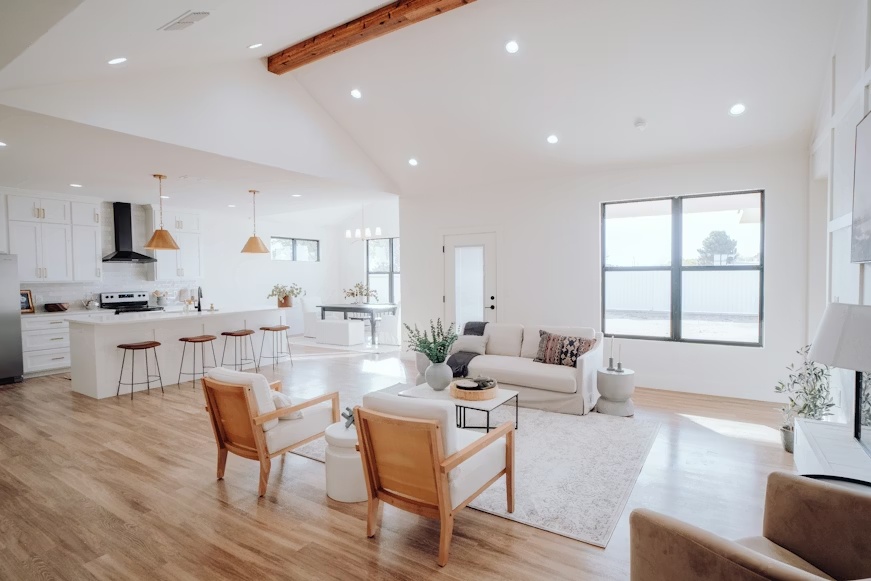
Thinking about building a custom home?
Everybody has an idea of what their dream home would be like. The challenge is making that vision a reality. Creating something tangible that stands, works, and lasts for decades is no easy task. The custom home design process is how you bridge that gap.
A good design build contractor takes that vague idea and turns it into:
- Drawings you can approve
- Plans engineers can stamp
- A real structure on your land
Here is how the process works…
What you’ll find inside:
- Why The Design Process Matters So Much
- The Step-By-Step Custom Home Design Process
- Common Mistakes People Make Along The Way
- How To Pick The Right Design Build Contractor
Why The Design Process Matters So Much
The design phase is the most important part of building a custom home. Period.
Why? Because everything else depends on it. Your budget, your timeline, your final result… It’s all decided during design. Get it wrong here and you’ll pay for it later in change orders and delays.
The market is more competitive than ever. New custom home construction increased 4% in the 2nd quarter of 2025, with 54,000 total custom building starts in the quarter. That means more pressure to get it right the first time.
- It locks in your budget: Decisions on paper are inexpensive to change. Decisions changed after construction starts are very expensive.
- It catches problems early: Good designers identify problems with your site, slope and drainage before the first shovel of dirt.
- It defines the whole build: The design is your project’s blueprint. Whether you’re working with luxury custom home builders in West Vancouver or elsewhere, an excellent design build contractor will take you through every stage before breaking ground.
Pretty straightforward, isn’t it? But people generally jump to choosing tiles and paint colours without knowing what this is.
The Step-By-Step Custom Home Design Process
Here is how a good design build contractor turns your vision into reality.
Step 1: Discovery & Vision Meeting
This is where it all starts.
When you sit down with your design build contractor and discuss your goals and objectives, you are not just talking about square footage. There are other, more meaningful issues at hand:
- How you live day-to-day
- What your family needs now (and in 10 years)
- Your lifestyle, hobbies, and must-haves
- Your budget (the real one, not the dream one)
The leading contractors are the ones who ask the most questions. They are trying to know you before designing anything.
Step 2: Site Analysis
Next up is the site.
No two sites are the same. Slope, soil, views, sun exposure, etc… all play a part in what can be built. Your design build contractor will consider:
- Topography and drainage
- Soil conditions
- Setbacks, easements, and zoning rules
- Natural features like trees and water
This is also when they take climate resiliency into account. The 2024 Hurricane Risk Report says there are more than 32.7 million residential properties in the U.S. at risk for hurricane wind damage.
Step 3: Concept Design
Now the fun begins.
Your design build contractor begins to make drawings. The first are sketchy and concepts for your floor plan. There’s no need to be completely specific at this point… This is a process of ideas and your input.
You’ll typically see:
- 2-3 different floor plan options
- Early exterior elevation sketches
- Rough 3D models or renderings
You review, the designer edits, and you repeat until you settle on a direction.
Step 4: Schematic Design
This is where concepts become real plans.
The rough sketches evolve into actual architectural drawings. Rooms are given real dimensions. Windows are located properly. The roof lines are finalized. The design build contractor will also provide an initial budget and early engineering input.
Step 5: Design Development
Now it’s time to get into the details.
Everything that needs to be determined about your home is determined right here. From cabinet heights to tile choices to window types to light fixtures. If it’s in your home it will be decided here. The more decisions you make now, the smoother construction will go.
Step 6: Construction Documents
This is the final step before building starts.
All of this design work is translated into construction documents. These are the working drawings that your contractor, engineers, and inspectors use to build your home. With these in hand, your contractor can apply for permits and begin construction.
Common Mistakes People Make Along The Way
Even if you hire a fantastic design build contractor, some things can still go wrong. Here are the most common mistakes.
Hurrying through the discovery phase: Skipping this step leaves you with a house that may not suit your lifestyle.
Ignoring the budget: You can fall in love with features that you cannot afford. Be realistic in what you can pay for.
Making changes too late: All changes during construction are 10-100x more expensive than during the design stage. Large construction projects are typically 20% late and as much as 80% over budget.
Don’t just think about today: Your family will evolve. Your needs will evolve. Plan for the next two decades, not just for now.
How To Pick The Right Design Build Contractor
Not all contractors are equal. Here’s what to look for.
Experience With Custom Homes
Anyone can build a cookie-cutter home. Custom homes are different. They require:
- Creative problem solving
- Tight attention to detail
- Strong communication with clients
- A deep network of skilled subtrades
Search for a design build contractor with a proven track record of completed custom homes. Request photos, visit job sites and speak with previous clients.
A Proven Process
Great contractors have a process. They know how to take a project from idea to completion because they’ve done it hundreds of times. If a contractor can’t explain to you their process step-by-step… Red flag.
Strong Communication
You will be dealing with this group for a year or more. Be sure you like them and they respond quickly. Poor communications is the number one reason custom home projects fail.
Bringing It All Together
Building a custom home is a huge endeavor. However, when you partner with the right design build contractor and follow a good process… Your vision can truly become structural reality.
To quickly recap:
- Spend time on discovery and vision first
- Get your site analysed properly
- Move from rough concepts to detailed plans
- Lock in details before construction starts
- Pick a contractor with proven experience
Custom home design isn’t quick. It isn’t inexpensive either. But if done right, you end up with a home that’s just right for the way you live.